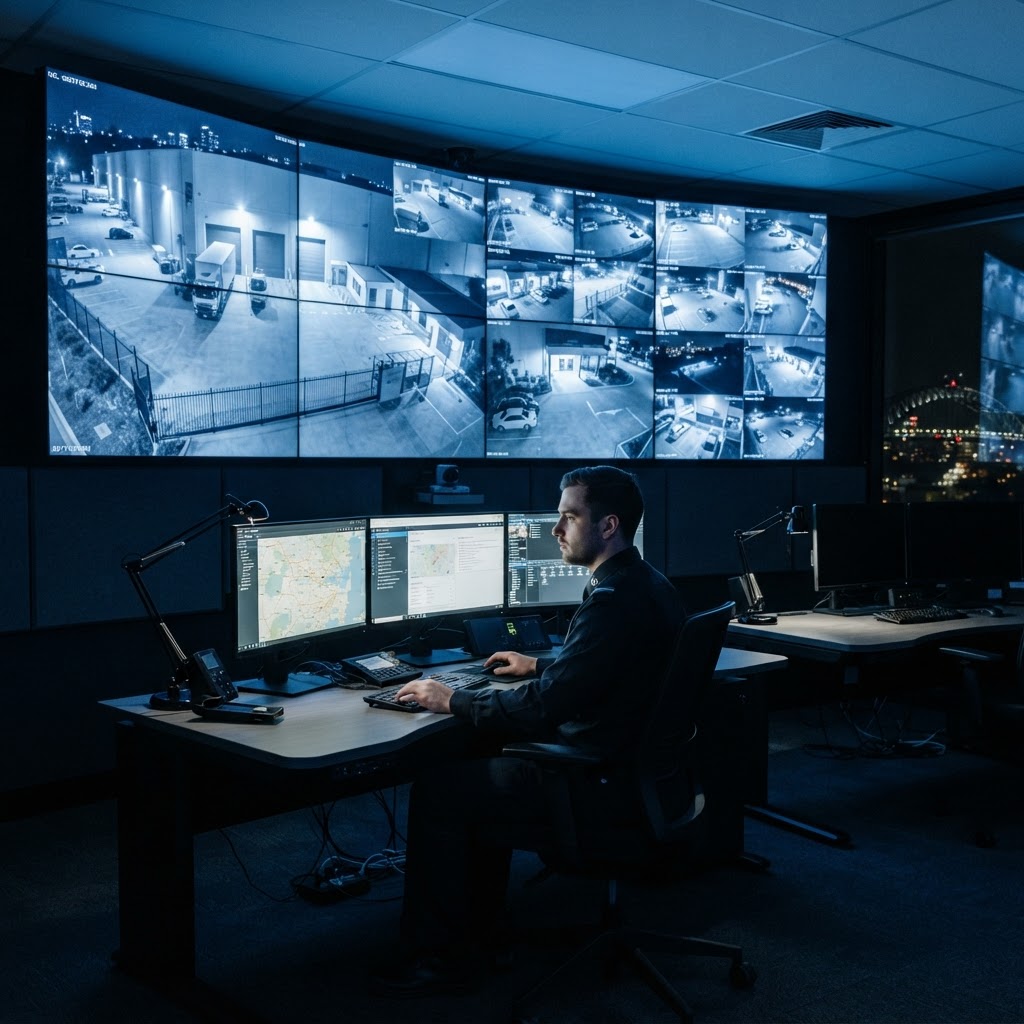
Sunday night, a logistics yard in Blacktown's industrial estate. Two figures cross the property at 11pm, force a roller door, and are gone with a pallet of stock in under ten minutes. The cameras recorded every second, and nobody saw a frame of it until Monday morning.
That gap between recording and responding is exactly what CCTV monitoring closes. Plenty of Sydney businesses own cameras that quietly collect footage nobody watches until after a loss. Twenty-four-hour remote surveillance flips the model: licensed control room operators watch your site live during the hours it is most exposed, verify what they see within seconds, and act within minutes. Here is how it works, and why it changes the maths of protecting a commercial site.
Recording vs Monitoring: What Is the Difference?
A standard CCTV system is a witness. It documents what happened so you can review footage later, pass clips to NSW Police, or support an insurance claim. Useful, but it does nothing in the moment. By the time anyone reviews the footage, the stock is gone and the trail is days cold.
Monitored CCTV is a responder. Your cameras stay connected to a control room that receives alerts whenever camera analytics detect motion, loitering or line-crossing after hours. Instead of an incident being discovered the next morning, a trained operator is assessing the same event within seconds: is it wind-blown debris, a late courier, or someone testing your roller doors?
What Happens When an Operator Spots Something?
A professional monitoring arrangement follows a documented response sequence:
- Verification. The operator reviews the triggering camera and neighbouring views to confirm what is happening, filtering out weather, wildlife and passing traffic.
- Voice-down warning. Most monitored systems include two-way audio. An operator announcing that the site is monitored, recorded, and that response is on its way stops a large share of offences on the spot.
- Patrol dispatch. If the voice warning does not clear the site, a licensed mobile patrol officer is sent to physically attend and inspect.
- Police escalation. Live, verified footage of an offence in progress earns a priority police response, because the control room can confirm the event is real, which an unverified siren cannot.
- Documentation. Time-stamped clips and a written incident report reach the site owner the same night, keeping your evidence trail intact for police and insurers.
The sequence matters because most commercial break-ins are over within minutes. A system that only records will always be too late by design.
Where Monitored CCTV Earns Its Keep in Sydney
Some sites benefit far more than others from a live control room watching over them:
- Industrial estates and logistics yards across Western Sydney, from Blacktown and Penrith through to Liverpool and Bankstown, where roller doors, yards and high-value stock concentrate risk after hours
- Construction sites carrying plant, materials and tools that cannot be taken home overnight
- Offices and business parks in Parramatta, Chatswood, Castle Hill and Norwest, where coverage that switches on when staff leave beats paying for continuous guarding
- Sydney CBD towers and retail strips, where after-hours activity needs quick sorting: genuine cleaners and contractors from everyone else
Monitoring also scales in a way guards do not. The same control room can watch one loading dock or twenty cameras across a multi-building site, and coverage follows your opening hours, seasonally adjusted.
Deterrence Kicks In Before a Crime Starts
The best incident is the one that never happens. Monitored sites advertise their coverage through visible cameras, signage and, when someone does approach, that live voice warning. Offenders overwhelmingly prefer sites where nobody is watching, and word travels quickly around an industrial estate. Many insurers also look favourably on verified monitoring and documented incident response when assessing premiums and claims.
Video Verification Cuts False Callouts
False activations are the quiet killer of security budgets. Unverified alarms generate patrol callouts, police desensitisation and eventually a response plan nobody trusts. With CCTV verification, operators confirm each event visually before dispatching: false alarms are stood down in seconds, and genuine ones get a faster, more confident response because they arrive pre-verified. Pairing monitored cameras with a commercial security plan built around your actual site risks is what turns hardware into protection.
Licensing and Standards to Expect
In NSW, monitoring is licensed security work under the Security Industry Act 1997, administered by SLED (the Security, Enforcement and Licensing Directorate). The company watching your cameras must hold a current Master Security Licence, and monitoring operations should align with the relevant Australian Standards for intruder and CCTV monitoring. Before signing anything, ask for the provider's licence number and take two minutes to verify it on the SLED public register. A professional firm will produce it without hesitation.
Frequently Asked Questions
How is CCTV monitoring different from alarm monitoring?
Alarm monitoring responds to sensor signals: a control room knows a beam was broken, but not what broke it. CCTV monitoring gives operators eyes on the event itself. Used together, cameras verify what the alarm detects, which means fewer false callouts and a faster, more certain response.
Can my existing cameras be monitored?
Often, yes. Modern IP cameras can usually be connected to a monitoring platform with little or no new hardware. A provider should assess your current system, check coverage and image quality, and tell you honestly whether it is monitorable today or where it falls short.
Is monitored footage useful to NSW Police?
Very. Time-stamped footage and a control room's live verification give police an accurate record of what happened and when, and confirmed offences in progress receive a far higher response priority than unverified activation reports.
Does monitoring only run after hours?
No. Sites can be monitored around the clock, during trading hours only (retail stockrooms are a common example), or only when the business is closed. Coverage schedules should follow your site's real risk windows.
From Witness to First Responder
Cameras that merely record give you an archive. Cameras that are watched give you a response. For Sydney businesses that cannot staff every hour of the week, 24/7 CCTV monitoring is the most cost-effective way to put trained eyes on the property exactly when it matters. Request a quote and find out how little it can cost to have your site watched tonight.